rest
Sunlight & Circadian Rhythm
Upstream of sleep, mood, and cortisol.
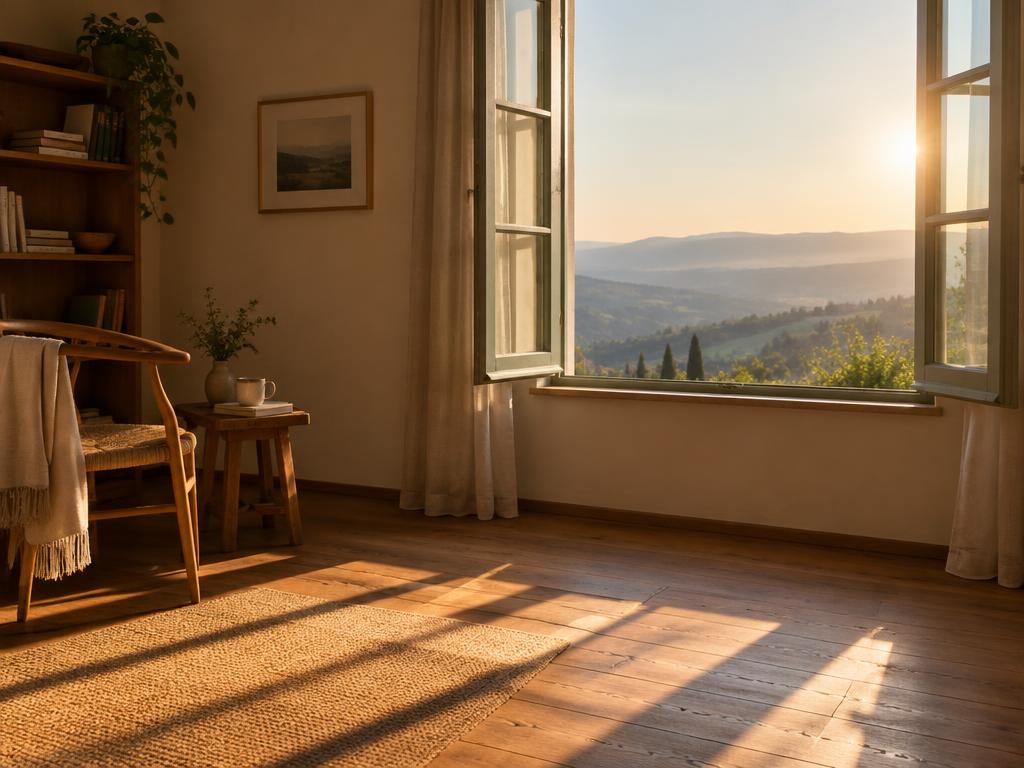
Morning light and a steady rhythm — the cheapest, strongest medicine we have.
Morning daylight is the dominant signal that sets the circadian clock, anchoring the cortisol awakening response and melatonin onset ~14–16 hours later.
Most modern nervous system trouble starts with a disrupted light environment: too little bright light by day, too much by night.
What the evidence says
Strong evidenceBright morning light therapy is an evidence-based treatment for seasonal and non-seasonal depression with effect sizes comparable to SSRIs. Large cohort data show that brighter daytime and darker nighttime light exposure predict lower risk of depression, self-harm, and psychosis.
References
- [1]Burns, A. C. et al. (2023). Day and night light exposure are associated with psychiatric disorders: an objective light study in >85,000 people. Nature Mental Health, 1, 853–862. Link ↗
- [2]Tao, L. et al. (2020). Light therapy in non-seasonal depression: An update meta-analysis. Psychiatry Research, 291, 113247. Link ↗
Quick reset — Sunlight & Circadian Rhythm
Guided care_links
Exercises
Practical, paced ways into sunlight & circadian rhythm. Start with whichever one feels least effortful — capacity returns through small, repeated doses, not heroic ones.
- 01
10 minutes, within 60 minutes of waking
Morning Light Anchor
Why it works · Early-morning sunlight activates intrinsically photosensitive retinal ganglion cells, suppressing residual melatonin and setting the master circadian clock in the suprachiasmatic nucleus. Consistent morning light exposure is one of the most reliable ways to stabilise sleep timing and mood across seasons.
Loading…
Take care
- Do not stare directly at the sun, especially within an hour of sunrise when it sits low.
- Those with photosensitive conditions (certain migraines, lupus, some medications) should consult a clinician before extended light exposure.
- 02
One week of tracking, then ongoing
Consistent Wake-Time Audit
Why it works · The circadian system is entrained partly by the timing of light and partly by the regularity of behavioural cues. A stable wake time — even after poor sleep — prevents the social jet-lag that fragments sleep architecture and elevates cortisol baseline.
Loading…
- 03
90 minutes before intended sleep, ongoing
Evening Dim-Down Routine
Why it works · Short-wavelength (blue) light from overhead fixtures and screens suppresses melatonin secretion by the pineal gland. Gradually reducing light intensity and shifting sources below eye level in the two hours before bed allows melatonin to rise on its natural schedule.
Loading…
Take care
- Ensure pathways to the bathroom remain safely lit to prevent falls, particularly for older adults.
- 04
Nightly, ongoing
No Overhead Lights After 21:00
Why it works · Overhead lighting — ceiling fixtures, bright bathroom lights — places high-lux sources in or near the upper visual field, the same region retinal cells most sensitive to melanopsin activation are concentrated. Eliminating overhead light after early evening significantly reduces total evening light load even if other sources remain.
Loading…
- 05
5–10 minutes around dusk
Sunset-Light Viewing
Why it works · The long-wavelength (red and orange) light dominant at sunset activates a distinct photoreceptor signalling pathway that appears to buffer the retina and circadian system against the effects of later artificial light. Viewing sunset light is a low-effort bookend to morning light exposure.
Loading…
Take care
- As with morning, avoid looking directly at the sun even near the horizon.
- 06
20–30 minutes, within 60 minutes of waking
Winter Light-Box Session
Why it works · At latitudes above roughly 50° north, winter morning light is too dim and arrives too late to reliably entrain the circadian clock. A clinical 10,000-lux light box provides the retinal stimulation that outdoor light cannot, and is the most evidence-supported non-pharmacological intervention for seasonal mood changes.
Loading…
Take care
- Light therapy can trigger hypomania in people with bipolar disorder. Those with a bipolar diagnosis should use it only under clinical guidance.
- If you notice unusual irritability, insomnia, or a racing mind, reduce session length and consult your GP.
- Light boxes are not a substitute for professional support for clinical depression.
- 07
One-off audit, then ongoing practice
Screen-Light Hygiene Audit
Why it works · Screens emit predominantly short-wavelength light and are typically held close to the face, maximising retinal dose. Warm-filter software reduces the blue component significantly, and combining this with brightness reduction and physical distance gives meaningful melatonin protection in the evening.
Loading…
- 08
One week of self-observation
Late-Light and Late-Meal Pairing Audit
Why it works · The circadian system integrates both light cues and feeding cues. Eating late in the evening — particularly large meals — signals wakefulness to peripheral clocks in the liver and digestive organs, working against the central clock's wind-down. Auditing whether late light and late eating coincide can reveal a compounding delay.
Loading…
Take care
- Those with blood-sugar conditions requiring regular meals should not delay eating without medical advice.


