body
Somatic Practice
The body, listened to.
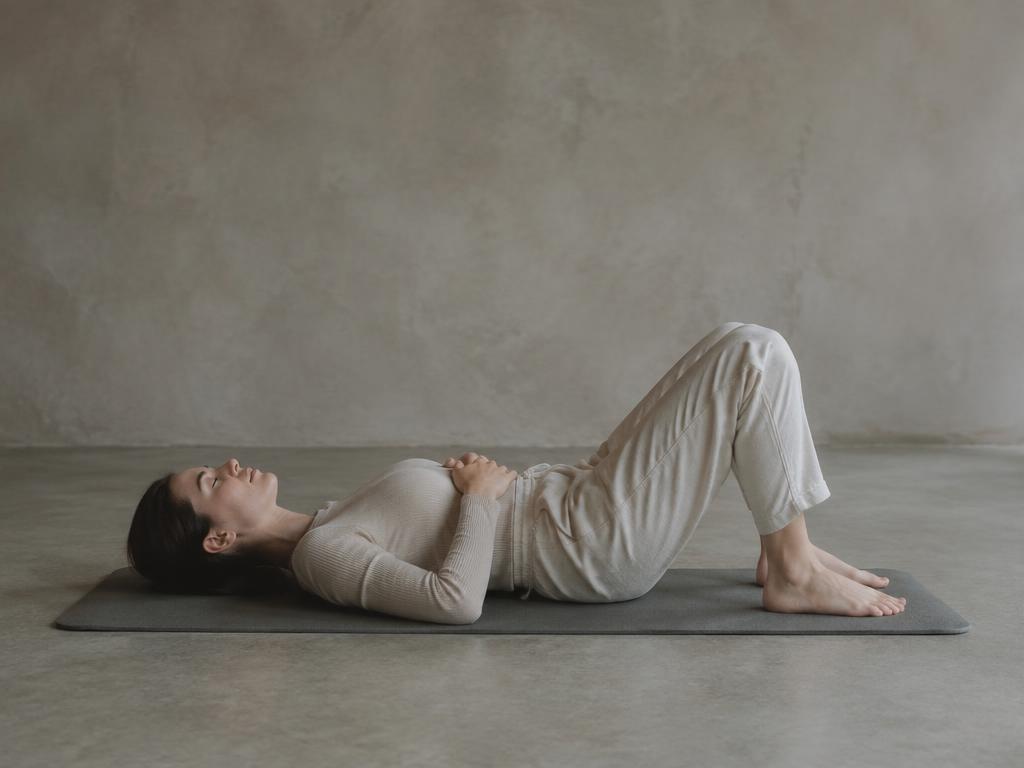
Slow practices that follow sensation back into safety.
Somatic work — pendulation, titration, orienting, the basic vagal exercises popularised by Stanley Rosenberg — teaches the body to discharge old activation and feel its own resources again.
Polyvagal theory itself remains scientifically contested as a complete neuroanatomical model, but the practices it inspired (slow eye movements, lying supine with gentle head support, orienting to the environment) have measurable effects on heart-rate variability and self-reported safety.
What the evidence says
Emerging evidenceA 2017 randomised controlled trial of Somatic Experiencing found significant reductions in PTSD severity and depression. Vagal-tone interventions (slow exhalation, supported lying, gentle neck mobilisation) reliably increase HRV, a robust marker of autonomic flexibility. Note: polyvagal theory's specific evolutionary and anatomical claims have been challenged in peer review.
References
- [1]Brom, D. et al. (2017). Somatic Experiencing for Posttraumatic Stress Disorder: A Randomized Controlled Outcome Study. Journal of Traumatic Stress, 30(3), 304–312. Link ↗
- [2]Grossman, P. (2023). Fundamental challenges and likely refutations of the five basic premises of the polyvagal theory. Biological Psychology, 180, 108589. Link ↗
- [3]Laborde, S. et al. (2022). Effects of voluntary slow breathing on heart rate and heart rate variability: A systematic review and a meta-analysis. Neuroscience & Biobehavioral Reviews, 138, 104711. Link ↗
Quick reset — Somatic Practice
Guided care_links
Exercises
Practical, paced ways into somatic practice. Start with whichever one feels least effortful — capacity returns through small, repeated doses, not heroic ones.
- 01
3–5 minutes
Orienting — Slow Head Turns
Why it works · Slow, voluntary scanning of the environment signals safety to the nervous system through the social engagement system and the vestibular apparatus; it is one of the quickest ways to shift from a defended state toward ventral vagal regulation.
Loading…
- 02
5–10 minutes
Voo Sound
Why it works · Prolonged voiced exhalation on a low-pitched vowel vibrates the vagus nerve through the pharynx and stimulates parasympathetic tone; Peter Levine's Somatic Experiencing practice uses this as a foundational regulating exercise.
Loading…
Take care
- If you feel lightheaded, pause and breathe normally. You may be breathing too forcefully — the exercise should feel effortless.
- 03
5–10 minutes
Butterfly Hug — Bilateral Tapping
Why it works · Alternating bilateral stimulation, as used in EMDR-adjacent practices, appears to facilitate the integration of distressing material and promote a sense of dual awareness — present safety alongside difficult memory.
Loading…
Take care
- This technique is adapted from trauma therapy. If you experience a sudden surge of distressing emotion or imagery, open your eyes, press your feet into the floor, and stop. Work with a somatic therapist if distress is frequent.
- 04
10–15 minutes
Pendulation Between Activation and Ease
Why it works · Pendulation — gently moving attention between a place of difficulty in the body and a place of relative ease — expands the nervous system's window of tolerance by training the capacity to move out of, and return to, settled states.
Loading…
Take care
- Stay with mild sensations. If discomfort intensifies beyond what you can hold lightly, return to ease and remain there. Do not push.
- 05
3–5 minutes
Grounding Through Feet
Why it works · Directing attention to the felt contact of feet with the floor activates distal interoception and exteroception simultaneously, anchoring awareness in the present moment and away from ruminative or anxious cognition.
Loading…
- 06
5–10 minutes
Resourcing — Recalling a Safe Place
Why it works · Deliberate recall of a remembered or imagined safe environment activates associated somatic states; regular use of a resource builds a reliable regulatory anchor the nervous system can return to under stress.
Loading…
- 07
10–15 minutes
TRE-Style Gentle Shaking
Why it works · Spontaneous or induced tremoring appears to discharge residual muscular tension associated with the freeze or stress response; many mammals tremble after acute threat and thereby complete the physiological cycle — a capacity humans have learned to suppress.
Loading…
Take care
- TRE-style shaking can release emotional material. If strong emotion surfaces, do not suppress it, but also do not push the shaking further. Work with a trained TRE facilitator if you wish to explore this practice more deeply.
- Those with pregnancy, recent surgery, or significant lower-back injury should consult a practitioner before attempting the hip-raise position.
- 08
5–10 minutes
Container Exercise
Why it works · The container visualisation is a cornerstone of somatic and trauma-informed therapy; it offers a way to consciously set aside overwhelming material for a defined period, restoring a sense of internal choice and reducing intrusion.
Loading…
Take care
- The container is a coping tool, not avoidance. Use it to create enough space to function, not to permanently suppress what needs eventual attention.
- If you are in trauma therapy, discuss this practice with your therapist — it works best as part of a broader therapeutic process.


