rest
Nature
The original regulator.
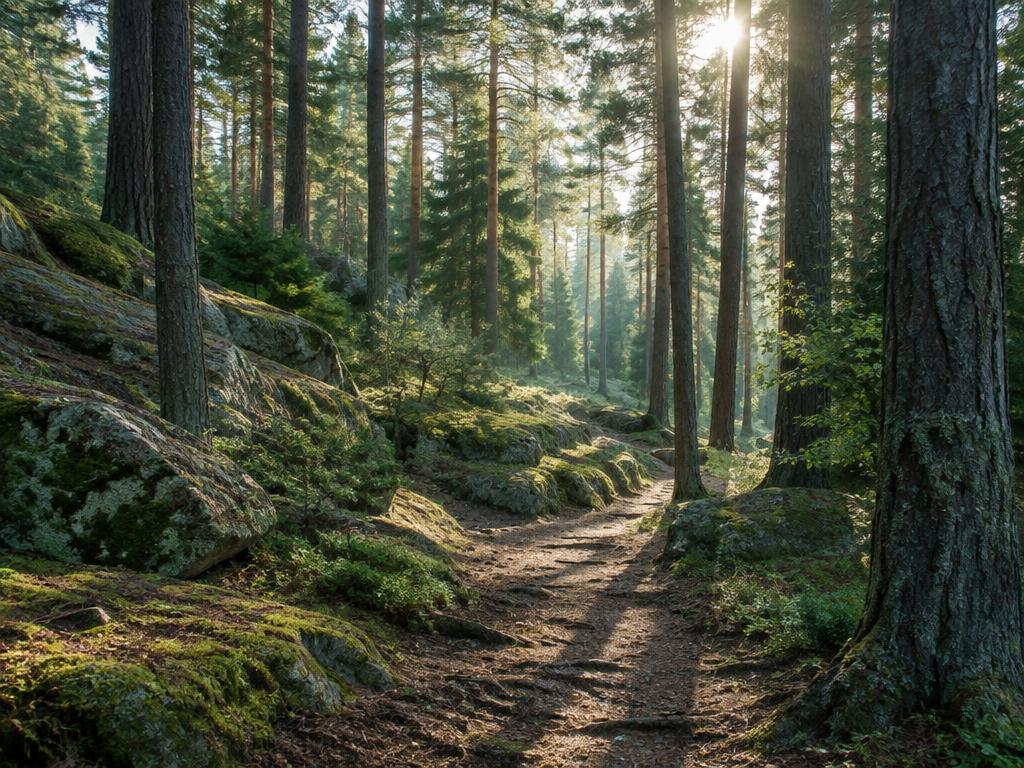
Trees, water, soil, sky — the oldest medicine for an overstimulated system.
Time in nature lowers cortisol, slows the breath, and gives the eyes long horizons to rest on. We weave nature into the programme as practice, not as luxury.
A landmark UK study found a threshold of roughly 120 minutes per week of nature contact is associated with significantly better health and wellbeing.
What the evidence says
Strong evidenceShinrin-yoku (forest bathing) trials show reduced cortisol, lowered blood pressure, and increased natural killer cell activity. A 2019 study of nearly 20,000 people found a strong dose-response between weekly nature contact and self-reported health.
References
- [1]White, M. P. et al. (2019). Spending at least 120 minutes a week in nature is associated with good health and wellbeing. Scientific Reports, 9, 7730. Link ↗
- [2]Park, B. J. et al. (2010). The physiological effects of Shinrin-yoku (forest bathing). Environmental Health and Preventive Medicine, 15(1), 18–26. Link ↗
Quick reset — Nature
Guided care_links
Exercises
Practical, paced ways into nature. Start with whichever one feels least effortful — capacity returns through small, repeated doses, not heroic ones.
- 01
20–30 minutes
Sit-Spot Forest Bathing
Why it works · Sustained, unhurried time in woodland measurably lowers salivary cortisol and blood pressure; phytoncides released by trees appear to up-regulate natural-killer cell activity.
Loading…
- 02
Weekly, aim for 120 minutes total
120-Minute Weekly Nature Log
Why it works · Epidemiological data consistently show that spending at least 120 minutes per week in natural settings is associated with markedly better self-reported health and wellbeing; small increments across several outings count equally.
Loading…
Take care
- This is a tracking practice, not a rule. Weeks when illness or circumstance makes 120 minutes impossible are not failures.
- 03
10–20 minutes
Earthing / Barefoot Grounding
Why it works · Direct skin contact with the earth allows transfer of electrons from the ground's surface; preliminary research suggests this may reduce inflammatory markers and improve subjective calm, though evidence is still emerging.
Loading…
Take care
- Check the surface for sharp objects, glass, or hot sand before removing footwear.
- People with peripheral neuropathy or poor circulation should take care with barefoot walking on uneven ground.
- 04
20–45 minutes
Blue-Space Walk
Why it works · Proximity to water — oceans, rivers, lakes, urban canals — is associated with lower anxiety and improved mood beyond what green space alone provides; the combination of reflected light, rhythmic sound, and open horizon appears to facilitate attentional restoration.
Loading…
- 05
30–60 minutes
Therapeutic Gardening
Why it works · Gardening combines gentle physical activity, exposure to soil microbiota (which may support the gut–brain axis), and purposeful engagement with a living system — each independently associated with improved mood and reduced rumination.
Loading…
Take care
- Wear gloves if you have open skin wounds. If immunocompromised, consult a doctor before handling soil.
- 06
15–30 minutes, at or before sunrise
Dawn-Chorus Listening
Why it works · Morning light exposure anchors the circadian clock and suppresses residual melatonin; listening to birdsong in particular has been shown in field studies to reduce anxiety and promote attentional recovery.
Loading…
- 07
20–40 minutes
Night-Sky Watching
Why it works · Sustained gaze at a vast, dark sky reliably induces awe — an emotion associated with reduced self-referential thinking, lower inflammatory markers, and a broadened sense of time.
Loading…
- 08
5–15 minutes
Mindful Soil Contact
Why it works · Mycobacterium vaccae and other soil microbiota encountered through skin and inhalation appear to trigger serotonergic pathways; even brief exposure to outdoor soil is hypothesised to support mood through the gut–skin–brain axis.
Loading…
Take care
- Those who are immunocompromised should wear nitrile gloves for this practice.
- Avoid soil contact on open wounds or broken skin.


