body
Foam Rolling
Slow pressure that tells tight tissue it's allowed to let go.
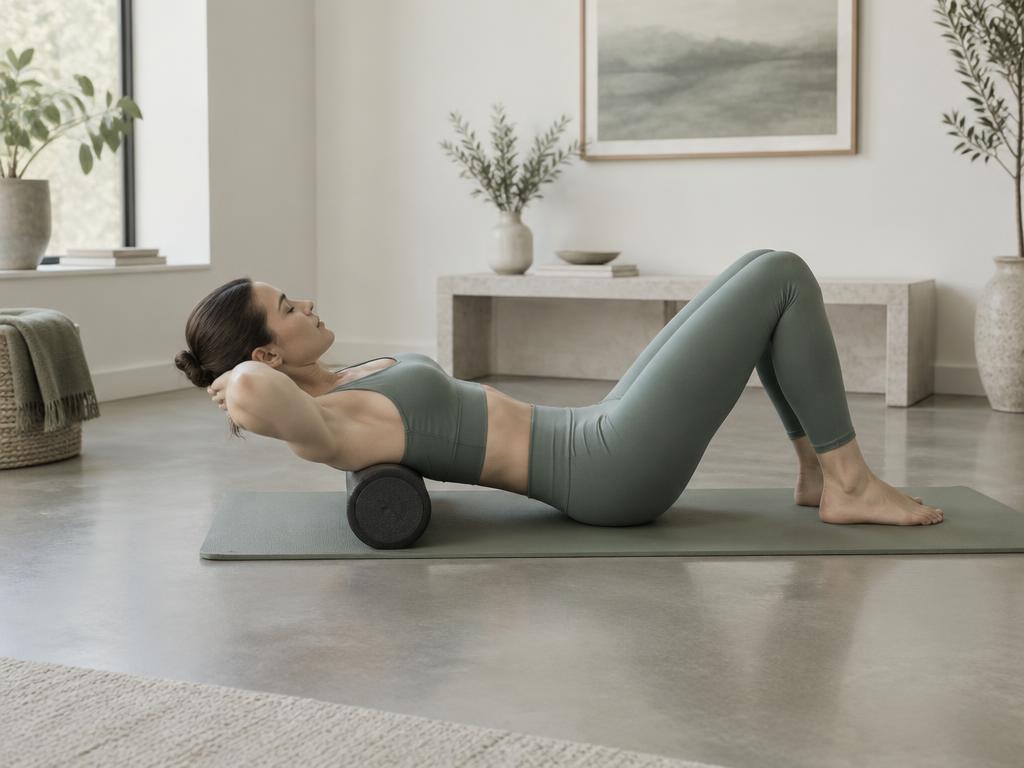
Self-myofascial release with a roller or ball — finding the tender spots and waiting, breathing, until they soften.
Foam rolling is self-applied pressure on muscle and fascia. Done slowly — finding a spot that feels tender or 'odd' and pausing there with long exhales — it becomes as much a nervous system practice as a mobility one.
The release you feel is less about 'breaking up' tissue and more about your nervous system lowering protective muscle tone once it registers that the pressure is safe.
What the evidence says
Emerging evidenceMeta-analyses show foam rolling produces short-term increases in range of motion without reducing performance, and reduces post-exercise muscle soreness (Wiewelhove et al., 2019). Effects appear largely neurophysiological — changes in pain perception and stretch tolerance — rather than mechanical change to fascia. Small studies suggest self-myofascial release may increase parasympathetic activity, but this is preliminary.
References
- [1]Wiewelhove, T. et al. (2019). A meta-analysis of the effects of foam rolling on performance and recovery. Frontiers in Physiology, 10, 376. Link ↗
- [2]Behm, D. G. & Wilke, J. (2019). Do self-myofascial release devices release myofascia? Rolling mechanisms: a narrative review. Sports Medicine, 49(8), 1173–1181. Link ↗
Guided care_links
Exercises
Practical, paced ways into foam rolling. Start with whichever one feels least effortful — capacity returns through small, repeated doses, not heroic ones.
- 01
5–10 minutes
Find the Spot and Hold
Why it works · Sustained gentle pressure with slow exhales lowers protective muscle tone and pain sensitivity via the nervous system.
Loading…
Take care
- Avoid rolling directly on joints, bones, varicose veins or injuries.
- Pressure should never be sharp or bruising.
- 02
3–5 minutes
Upper Back Opener
Why it works · Rolling the thoracic spine counters the hunched, braced posture common with chronic stress and eases breathing.
Loading…
Take care
- Do not roll the lower back directly; avoid with osteoporosis.
- 03
5 minutes
Ball Release for Feet and Hips
Why it works · Small balls reach dense areas like the soles and glutes, giving rich sensory input that can be deeply calming.
Loading…
- 04
10 minutes before bed
Evening Wind-Down Roll
Why it works · Slow, rhythmic self-massage combined with extended exhales encourages a parasympathetic shift before sleep.
Loading…


