body
Cold & Heat Therapy
Hormetic stress, in small doses.
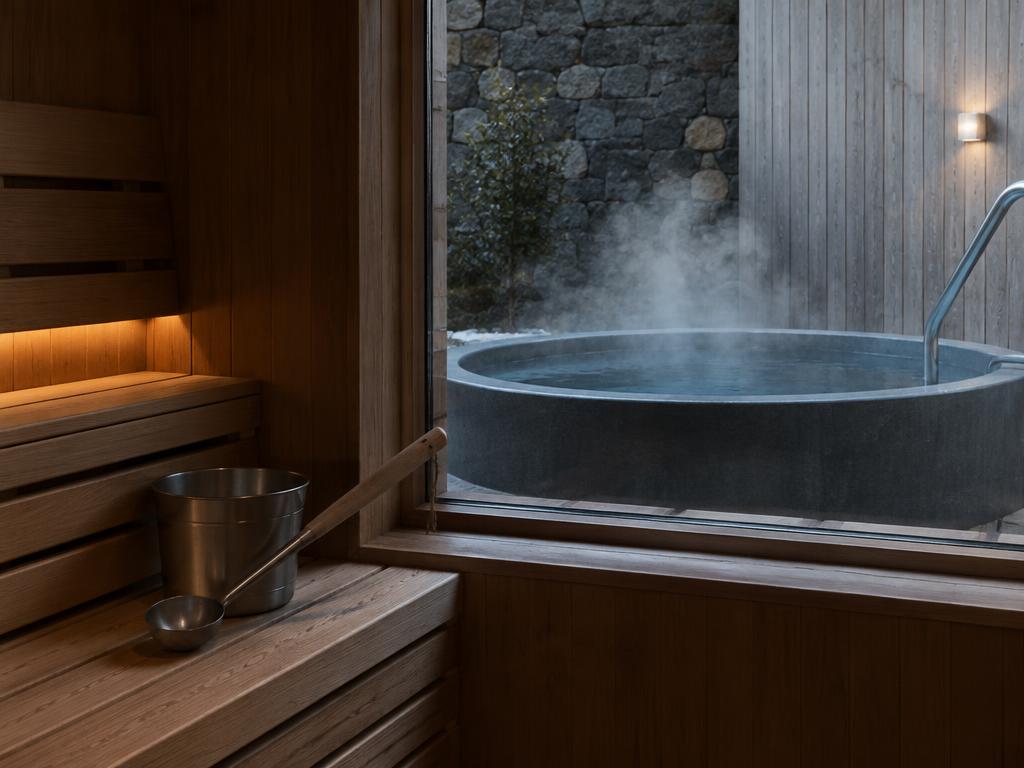
Contrast showers, sauna, and cold water to train autonomic flexibility.
Regular sauna use is associated with substantial reductions in cardiovascular and all-cause mortality in long-running Finnish cohort studies.
Cold-water exposure produces large, transient noradrenaline and dopamine spikes; trial evidence for mood benefit is emerging but smaller. Always start gently and respect contraindications.
What the evidence says
Emerging evidenceThe Kuopio Ischaemic Heart Disease cohort (2,315 men, 20 years) found 4–7 sauna sessions per week were associated with 40% lower all-cause mortality and 66% lower dementia risk compared to one session per week. Cold-water immersion shows acute mood and inflammatory effects; long-term RCTs are limited.
References
- [1]Laukkanen, T. et al. (2015). Association between sauna bathing and fatal cardiovascular events and all-cause mortality. JAMA Internal Medicine, 175(4), 542–548. Link ↗
- [2]Šrámek, P. et al. (2000). Human physiological responses to immersion into water of different temperatures. European Journal of Applied Physiology, 81(5), 436–442. Link ↗
Quick reset — Cold & Heat Therapy
Guided care_links
Exercises
Practical, paced ways into cold & heat therapy. Start with whichever one feels least effortful — capacity returns through small, repeated doses, not heroic ones.
- 01
Beginners: 30 seconds cold. Build gradually to 2 minutes over several weeks.
Cold-Finish Shower
Why it works · Brief cold-water exposure activates noradrenaline release in the brain and body, which can improve alertness and mood transiently. A graduated approach — warm shower finished with cold — allows the nervous system to adapt without the shock that disrupts rather than regulates.
Loading…
Take care
- Anyone with a cardiovascular condition, Raynaud's disease, or active infection should consult a clinician before beginning cold exposure.
- Do not attempt cold exposure immediately after intense exercise when core temperature is very elevated.
- Pregnant people should avoid cold therapy without specific obstetric advice.
- 02
15–20 minutes per session, 4 sessions per week
Sauna Practice — Four Times Weekly
Why it works · Population studies — including the Kuopio Ischaemic Heart Disease cohort — found that sauna use four or more times weekly was associated with substantially reduced cardiovascular mortality compared to once-weekly use. Repeated heat exposure improves vascular elasticity, reduces inflammatory markers, and induces hormetic stress adaptations.
Loading…
Take care
- Sauna is contraindicated in acute cardiovascular instability, severe hypertension, pregnancy, and in those taking medications that impair thermoregulation.
- Never use a sauna alone if you are new to it or have any health vulnerabilities.
- Alcohol and sauna are a dangerous combination — impaired vasodilation responses raise the risk of collapse.
- 03
8–12 minutes total
Contrast Shower Protocol
Why it works · Alternating heat and cold causes rhythmic vasodilation and vasoconstriction, often described as a vascular pump. This improves peripheral circulation and has been used in rehabilitation settings to reduce delayed-onset muscle soreness and support recovery.
Loading…
Take care
- Those with cardiovascular conditions should avoid extremes of temperature and use only mildly contrasting temperatures until cleared by a clinician.
- Raynaud's disease may be aggravated — use warm water only.
- 04
3–5 submersions, 10–15 seconds each
Face-Only Cold-Water Dip
Why it works · The mammalian dive reflex — triggered primarily by cold water contact on the face — rapidly slows heart rate and redirects blood flow, producing a parasympathetic override that can interrupt acute anxiety or distress. It is one of the fastest-acting self-regulation techniques available.
Loading…
Take care
- Do not practise this alone if you have a cardiac arrhythmia; the dive reflex produces a sudden bradycardia that can interact with some rhythm disorders.
- Do not hold your breath for extended periods — this is face submersion only, not breath-holding.
- 05
5–20 minutes depending on water temperature and experience
Cold-Water Swimming with a Companion
Why it works · Open-water swimming combines cold-exposure benefits with rhythmic movement, natural environment, and social connection — three independently well-supported regulators of nervous-system tone. The combination appears to produce wellbeing effects that exceed each component alone.
Loading…
Take care
- Never swim alone in open water.
- Never combine hyperventilation breathing exercises with water immersion — loss of consciousness can occur without warning.
- Cold-water swimming carries real risk of cold-water shock in the first 90 seconds of immersion; acclimatise gradually across many sessions.
- Cardiovascular disease, pregnancy, epilepsy, and some medications are contraindications — seek medical guidance first.
- 06
10–15 minutes
Post-Sauna Cool-Down
Why it works · The recovery phase after heat exposure is where many of the adaptive benefits are consolidated. A structured cool-down prevents the abrupt drop in blood pressure that causes faintness and allows the cardiovascular system to return to baseline in an orderly way.
Loading…
Take care
- Dizziness on standing after sauna is a warning sign — sit back down immediately and cool more gradually.
- Alcohol should be avoided before, during, and immediately after.
- 07
5 minutes preparation, then cold exposure
Breath-Led Cold Tolerance
Why it works · Slow, extended exhales activate the parasympathetic nervous system and reduce the perception of threat from cold, allowing a calmer entry into discomfort. This approach explicitly avoids hyperventilation methods, which carry blackout risk — especially near or in water.
Loading…
Take care
- Do not practise any form of intentional hyperventilation (rapid repeated deep breaths) before or during cold exposure. Loss of consciousness in water is fatal.
- Extended breath-holds in water are separately dangerous and are not part of this careLink.
- 08
30–45 minutes before bed
Heat-Then-Cool Sleep Protocol
Why it works · Core body temperature naturally drops by 1–2 °C in the hours before and during sleep. A warm bath or shower raises peripheral skin temperature, which accelerates the subsequent heat loss from the body's surface — paradoxically speeding up the core cooling needed for sleep onset.
Loading…


